We look back at the development of the behavior program at Cuyahoga County Animal Shelter (CCAS) and the way the Friends of the Cuyahoga County Animal Shelter FCCAS has supported it. Amanda Kopec, Behavior Coordinator at CCAS, tells the story.
In 2014, CCAS didn’t have a formal behavior/playgroup program. We had a volunteer program, but it was just saying to our new volunteers ‘Congratulations, here’s your leash, you’re going to walk a dog’. The dogs were not getting out and playing together.
Then, in 2015, we first connected with Dogs Playing for Life (DPFL) during a three-day workshop at a local partner shelter. DPFL is an enrichment program for shelter dogs, designed to improve their quality of life, assist shelters in assessing canine sociability, and enhance the adoption matching process to save more lives.
At that time, no other area shelters were implementing DPFL’s ideas, but we came back from the workshop saying ‘let’s figure out how we can do this!’
We started on a very small scale: only three days a week, and only for dogs that had finished their stray hold (the period before a stray dog is eligible for adoption). But the rapid turnover of dogs, as many went quickly from stray hold to rescues or partner shelters, made it difficult to achieve consistency and build on our experience.
In 2016, Cleveland’s municipal shelter noticed that when they sent their supposedly ‘dog-aggressive’ dogs to CCAS, they thrived in our playgroups. So the Cleveland shelter brought DPFL back to help them begin daily playgroup. Meanwhile CCAS expanded its playgroup program to seven days a week.
Then in 2017, DPFL persuaded CCAS to remove the stray-hold restriction. From then on, dogs on stray hold were allowed to go on walks and participate in playgroup, and the playgroup program really blossomed.
How do playgroups benefit dogs? Amanda explains:
“We want to make sure our dogs have an amazing quality of life. Dogs leave here having learned how to socialize with other dogs, how to trust people, and in some cases, basic obedience and behavior modification. We get dogs that have never met other dogs, are terrified of the world, don’t want to be touched or are snappy with other dogs. You give them 3-4 playgroups and they’re doing zoomies around the play yard and coming out of their shell. This improvement helps with behavior modification as well, because the dogs learn to trust the humans who lead playgroup.
Barrier and leash reactivity in our dogs decreases significantly, and sometimes even goes away, just because we get them into playgroup. We have also seen a dramatic reduction in high-arousal behavior that’s caused by being caged all day. That is, some dogs get jumpy and mouthy because they have a lot of pent-up energy. Nobody is meant to stay in a cage for 23 ½ hours a day. According to DPFL, in terms of benefits to the dogs, 20 minutes of playgroup is equivalent to a 2-hour walk – something that no shelter has enough staff and volunteers to do for every dog in their care.
Every dog in our building is out for either a potty break or playgroup by 10:30 AM every morning. Dogs that have been in playgroup go back to their kennel tired and want to take a nap. When dogs are tired and napping, they create less stress in the kennel. So even the dogs that don’t use up a lot of energy in playgroup benefit from the improved shelter environment. When we open to the public in the morning, the kennel is frequently silent. It’s beautiful to see the dogs relaxing because they’ve gotten what they need.
We have also noticed a drastic decrease in the number of dogs that are adopted out and then returned to CCAS because of dog-to-dog issues in the home. This is because we’re able to find out so much about them during playgroup. We have them for three to 14 days before they are available for adoption. That means we can observe them in three to 14 playgroups. So, we can tell potential adopters ‘these particular dogs would be a great fit for your dog. In addition, through playgroup, CCAS dogs arrive in their new home better socialized.”
Lastly, Amanda describes how FCCAS has helped CCAS accomplish all of this:
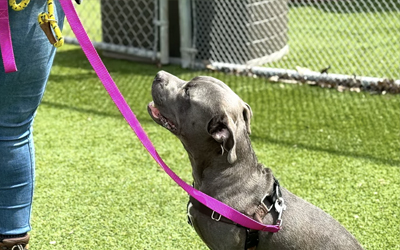
“For a long time playgroup looked more like mud wrestling. We had five yards that were made to let just one dog out at a time, not have 20 to 30 dogs romping and playing together. We also had to worry about the dogs contracting diseases like giardia because it was difficult to disinfect their play space. FCCAS put a lot of financial backing into getting all of CCAS’s yards turfed. Now, not only are the yards a lot easier to disinfect, they stand up much better to the daily wear and tear of large playgroups. This is summer camp, not prison!”
FCCAS is proud to support this wonderful example of compassion and innovation at CCAS.